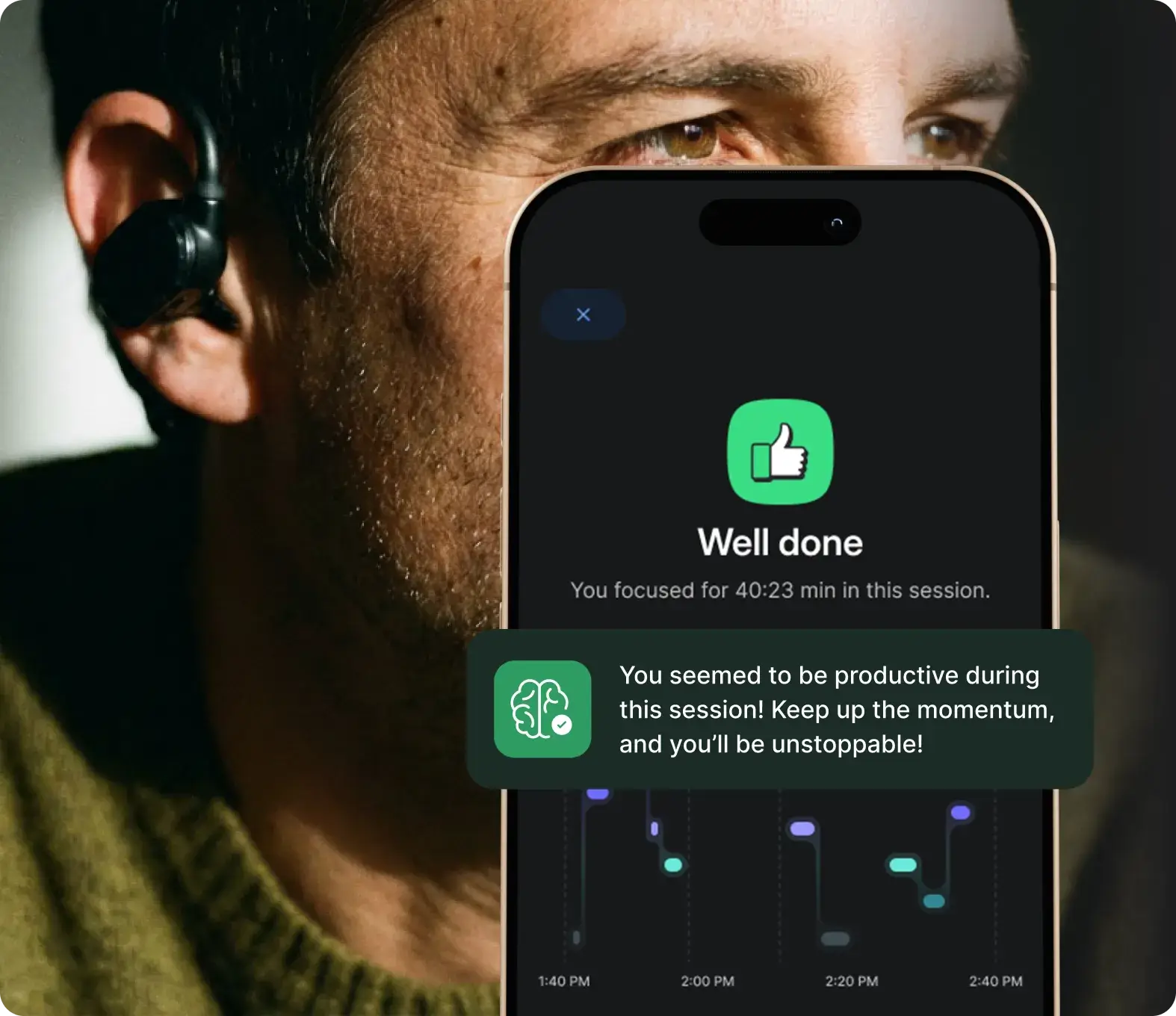
Every day, your brain performs an incredible balancing act. It decides what deserves your attention and what should fade into the background.
Whether you're reading in a busy coffee shop, following a conversation at a family gathering, or working while notifications compete for your attention, your ability to focus depends on filtering out distractions and staying locked on what's important.¹
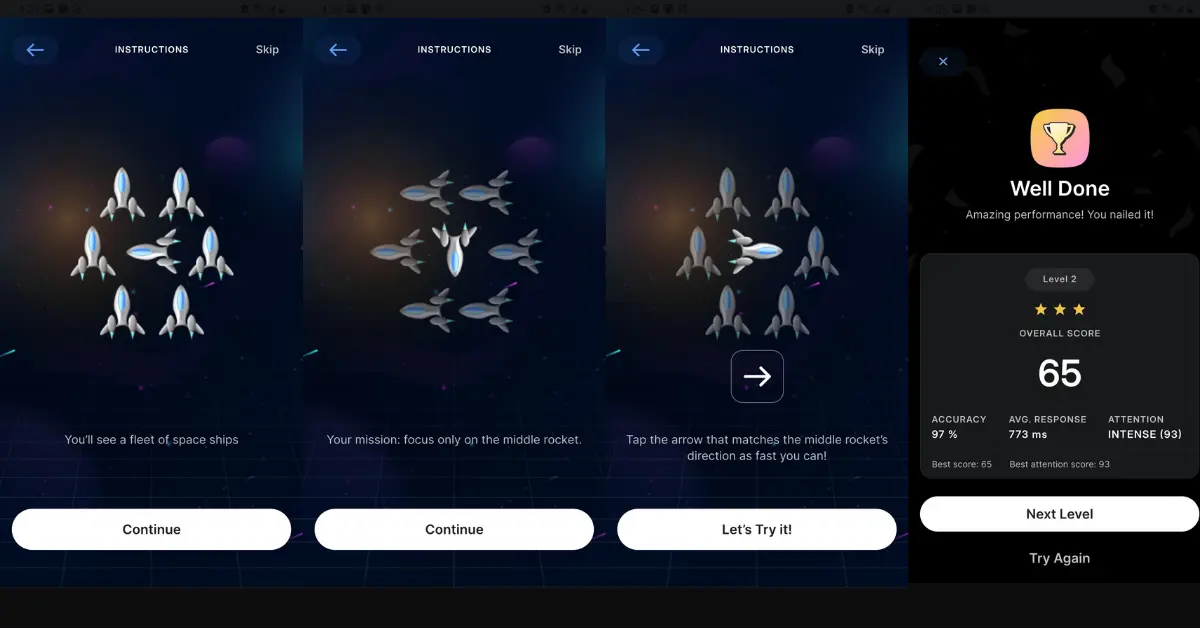
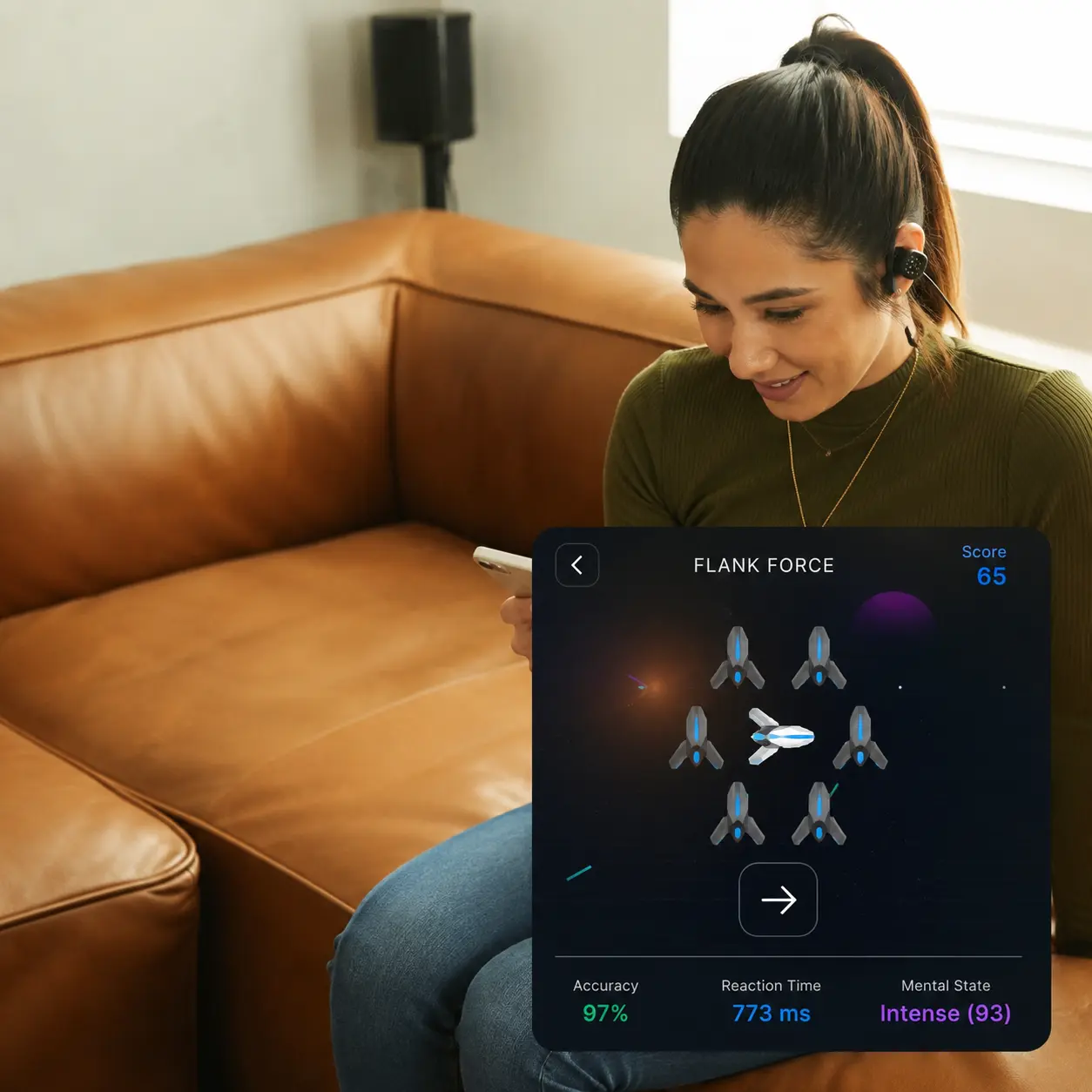
Flank Force is Brainwear's original game inspired by the classic flanker task, a cognitive exercise researchers have used for decades to study selective attention and response inhibition.² Instead of identifying letters or arrows, you'll focus on a fleet of rockets, responding only to the one in the center while ignoring the distractions surrounding it.
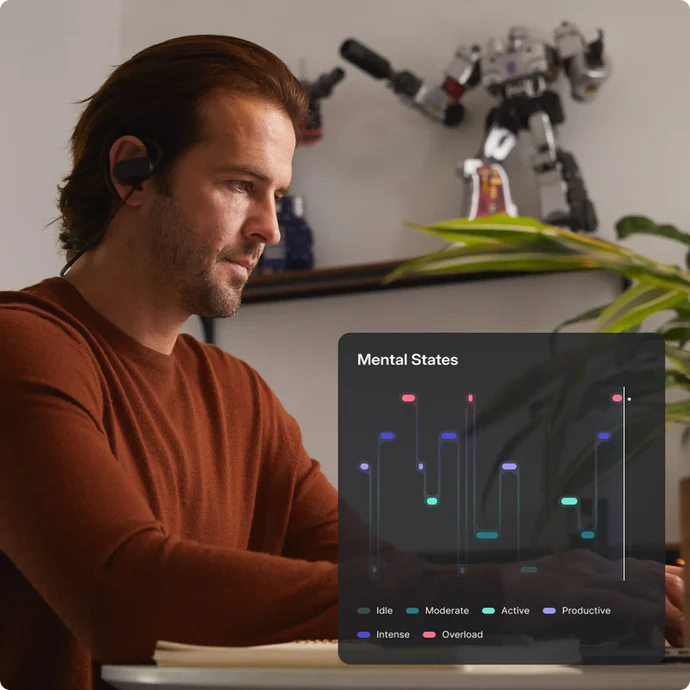
As you play, Brainwear helps you observe your Mental State, giving you additional context about how your focus changes as each challenge becomes more demanding.
Key Takeaways
Flank Force challenges your ability to stay focused while ignoring distractions.
The game is inspired by the classic flanker task used in cognitive research.²
Good performance depends on balancing speed and accuracy.
Brainwear helps you observe your Mental State throughout each session, providing additional context alongside your game results.
Looking for patterns over time can help you better understand how factors such as sleep, stress, and daily routines may influence your focus.³⁴
Why Attention Matters
Your attention is one of your brain's most valuable resources.
Every moment, your brain receives far more information than it can process. Instead of trying to pay attention to everything, it constantly decides what deserves your focus and what can safely be ignored.¹
Imagine reading a book while people nearby are talking.
You notice the conversations, but your brain filters most of them into the background so you can continue reading. That ability to prioritize relevant information while ignoring distractions is known as selective attention, and it's essential for everything from learning and problem solving to driving and everyday conversations.¹²
You rely on selective attention whenever you:
Read while the television is on
Drive through busy traffic
Listen to one person in a crowded room
Work while emails and notifications appear
Without this filtering process, even simple tasks would quickly become overwhelming.
How Flank Force Works
Flank Force is easy to learn but increasingly difficult to master.
Your objective is simple:
Focus on the rocket in the center of the screen and choose the arrow that matches the direction it's facing.
The surrounding rockets are there for one reason: to distract you.
As you progress through seven increasingly challenging levels, you'll need to make quick decisions while resisting the urge to react to the surrounding rockets. This type of challenge has been widely used in cognitive research because it requires your brain to stay focused while suppressing competing information.²
Success isn't about reacting as quickly as possible.
It's about responding accurately while maintaining your focus.
Why Speed and Accuracy Both Matter
It's tempting to think faster always means better.
In reality, attention is a balance.
Respond too slowly, and your reaction time increases.
Respond too quickly, and you're more likely to make mistakes.
That's why Flank Force looks at multiple aspects of your performance instead of relying on a single score.
Your results include:
Overall Score
Accuracy
Average Response Time
Attention
Highest Level Reached
Together, these results provide a more complete picture of your performance than any one number alone.
Understanding Your Mental State During Play
Your game results tell you what happened.
Your Mental State helps provide context about how much mental effort the task required.
As you play Flank Force, Brainwear helps you observe changes in your Mental State throughout the session.
You may notice Mental States such as:
Moderate: Comfortable mental effort
Active: Steady concentration
Productive: Working near your best
Intense: Short periods of high mental effort
Overload: The task is demanding more mental effort than is comfortable to sustain
There isn't a "perfect" Mental State.
For example, reaching Intense during one of the game's most difficult levels may simply reflect that you're fully engaged with a challenging task. Spending extended periods in Overload may suggest that the activity requires more mental effort than you'd like to maintain over time.
Mental States aren't scores to maximize. They're another way to observe how your brain responds to different challenges.
Look for Patterns Over Time
One game tells you how you performed today.
Many sessions can reveal patterns.
Over time, you may notice that:
You focus better after a good night's sleep.³
Your reaction time changes throughout the day.
Stress makes certain levels feel more challenging.⁴
Taking regular breaks helps you stay engaged longer.³
These observations can help you better understand how your daily habits influence your ability to focus.
Everyone Focuses Differently
No two people focus in exactly the same way.
Some people excel at making quick decisions. Others naturally prioritize accuracy. Your own attention may even change from one day to the next depending on factors like sleep, stress, or mental fatigue.³⁴
Flank Force gives you a consistent way to challenge your attention.
Brainwear adds another layer by helping you observe your Mental State throughout the experience.
Together, they make it easier to understand your own patterns and see how your focus responds to everyday life.
Challenge Your Focus with Brainwear
Ready to put your attention to the test?
Play Flank Force with Brainwear to challenge your focus, observe your Mental State, and discover how your attention changes over time.
Every session is an opportunity to learn something new about how you focus.
References
¹ Posner MI. Orienting of attention. Quarterly Journal of Experimental Psychology. 1980;32(1):3-25.
² Eriksen BA, Eriksen CW. Effects of noise letters upon the identification of a target letter in a nonsearch task. Perception & Psychophysics. 1974;16(1):143-149.
³ Diamond A. Executive functions. Annual Review of Psychology. 2013;64:135-168.
⁴ Lim J, Dinges DF. A meta-analysis of the impact of short-term sleep deprivation on cognitive variables. Psychological Bulletin. 2010;136(3):375-389.
Emotiv is a neurotechnology leader helping advance neuroscience research through accessible EEG and brain data tools.
H.B. Duran