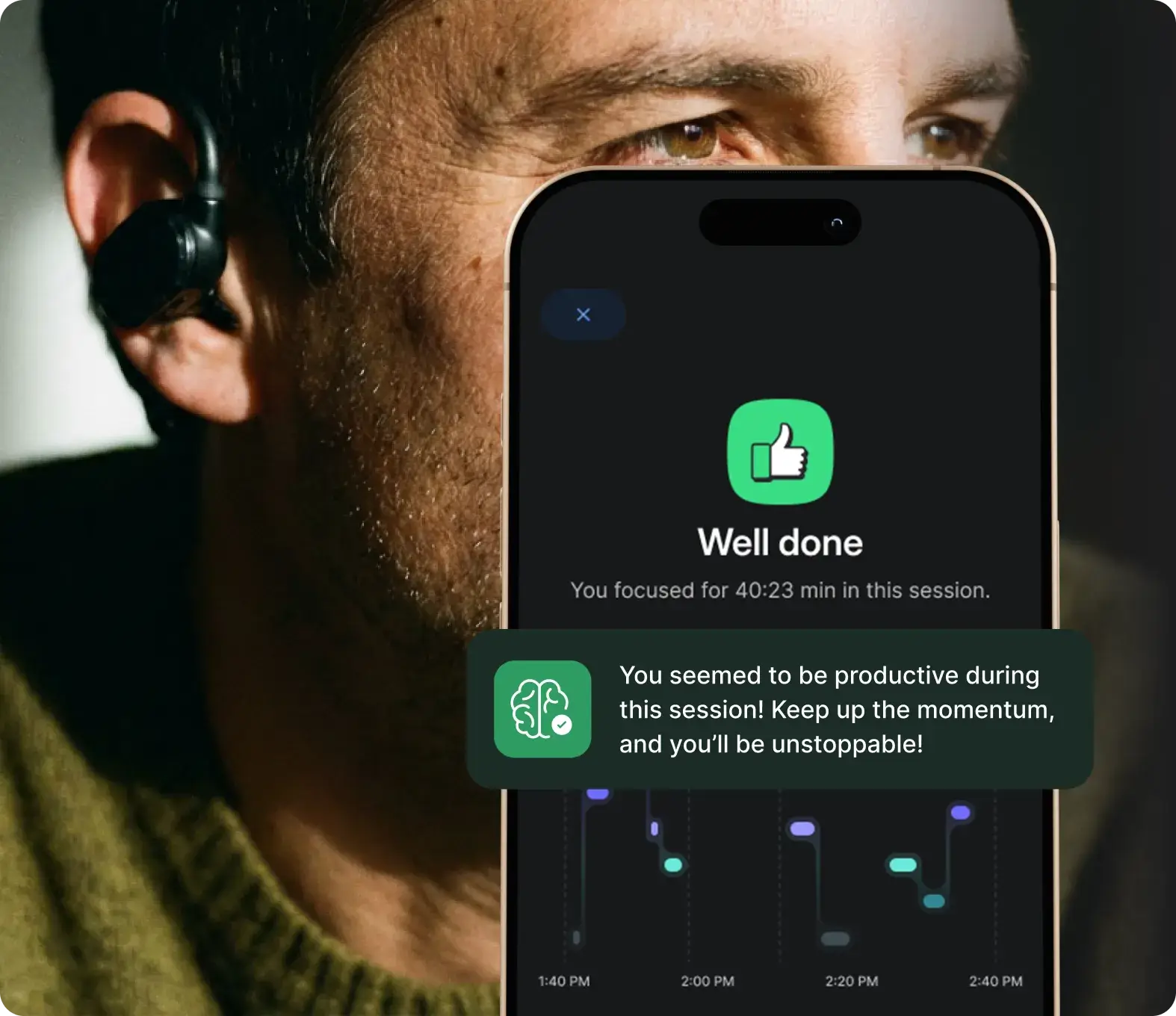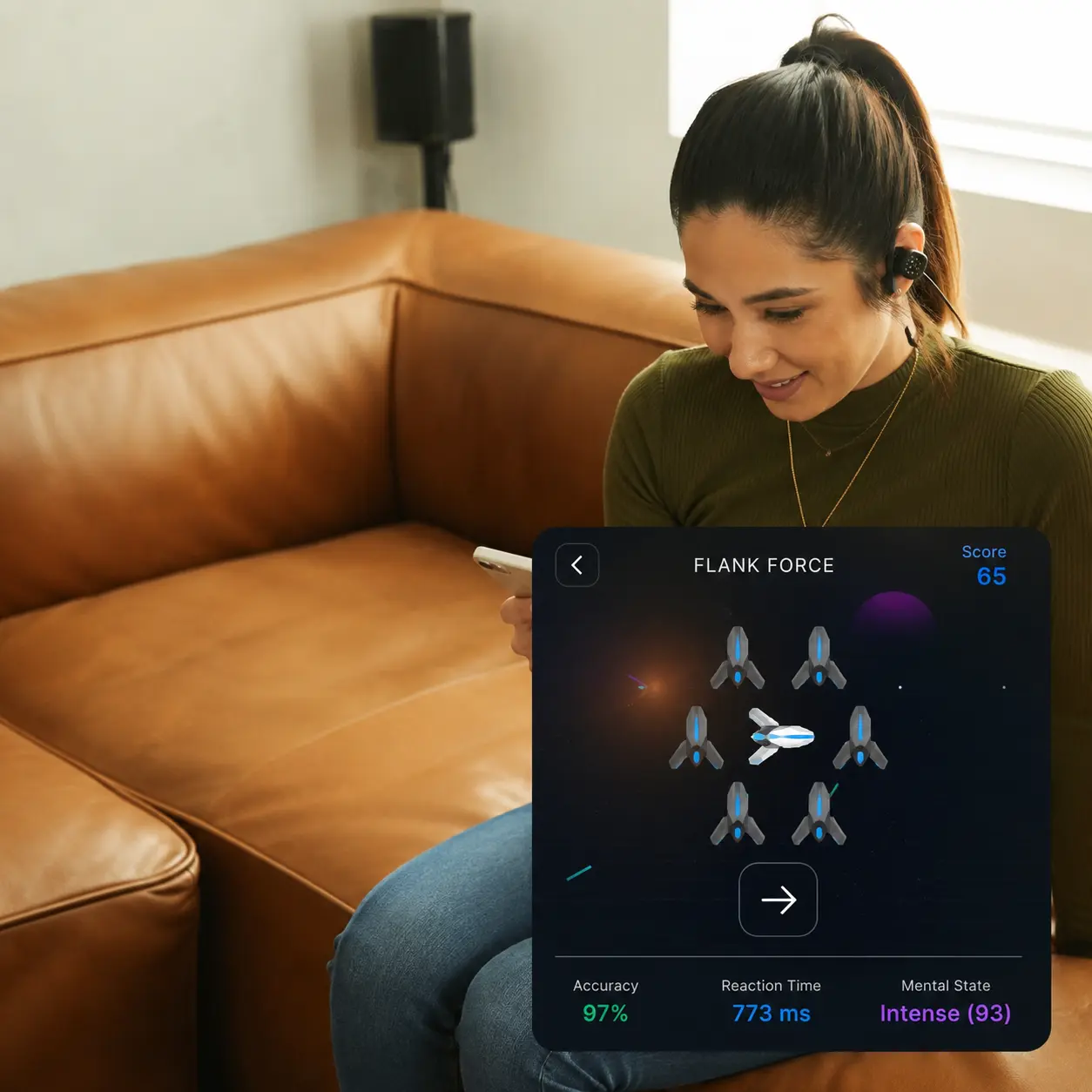
Your brain doesn't work at the same level all day.
Sometimes you feel calm and refreshed. Other times you're deeply focused, mentally tired, or somewhere in between. These changes are a normal part of how your brain responds to different activities and demands.¹
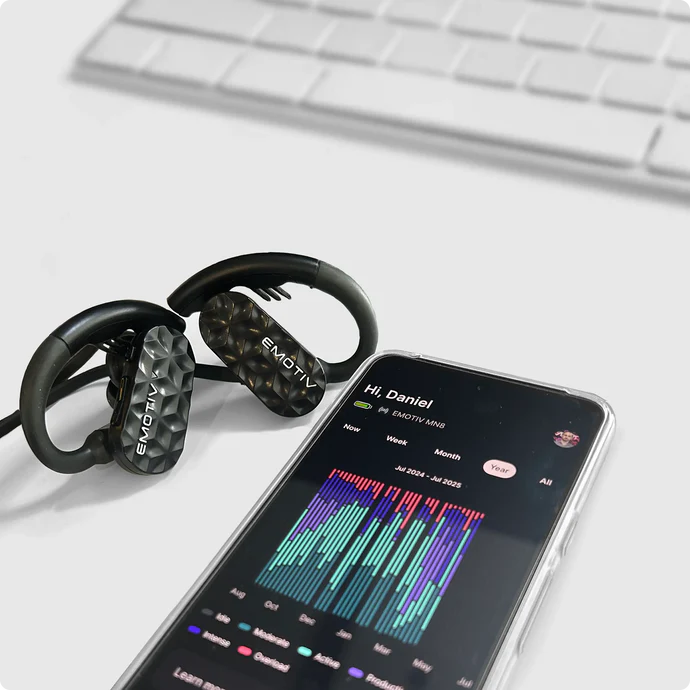
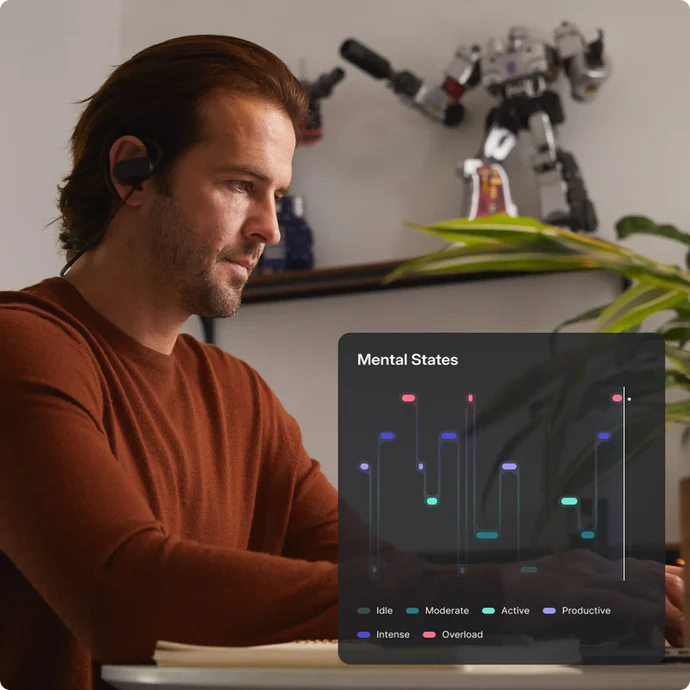
Brainwear helps you observe these natural changes through your Mental States. Rather than simply giving you a score, Mental States provide context for how much mental effort you're using during an activity.
Over time, observing these patterns can help you better understand your daily routines and discover what helps you stay focused, productive, and well.
Key Takeaways
Mental States help you observe how much mental effort you're using during an activity.
There is no single "best" Mental State.
Different activities naturally require different levels of mental effort.¹
Looking for patterns over time can help you better understand your daily routines.
Brainwear helps you observe, understand, and learn from your own patterns.
What Are Mental States?
Mental States provide another way to understand what's happening while you use Brainwear.
Think of them as a window into how much mental effort you're using during an activity.
Some tasks require very little concentration. Others demand your full attention. Your Mental State provides context for where your brain is operating along that range.¹²
Instead of asking, "Was that a good score?" you can also ask, "How much effort did that task require?"
Your Mental States Explained
Idle
Time to recharge.
Idle often appears when you're resting, relaxing, or between activities.
Moments like these give your brain an opportunity to recover before the next challenge. Recovery is an important part of maintaining attention throughout the day.³
You might notice Idle while:
Taking a break
Sitting quietly
Waiting in line
Relaxing between tasks
Moderate
Comfortable mental effort.
You're engaged, but the activity doesn't require much concentration.
Many familiar or routine activities naturally fall into this range.
Active
Steady focus.
You're paying attention and actively engaged with what you're doing.
This is often where people spend much of their day while working, learning, or completing everyday tasks.
Productive
Working near your best.
You're focused, engaged, and using your attention effectively.
Many people experience Productive during activities that are challenging enough to keep them engaged without feeling overwhelming.¹
Intense
High mental effort.
Your brain is working hard to keep up with a demanding task.
Short periods of Intense are completely normal when you're concentrating deeply or tackling something difficult.
Overload
Your brain is working harder than it can comfortably sustain.
Overload doesn't mean you've done something wrong.
Instead, it suggests the task may be requiring more mental effort than you'd want to maintain for a long period of time.
If you notice yourself spending extended periods in Overload, it may be a good opportunity to pause, take a break, or return to the task with fresh energy. Research shows that prolonged mental effort, stress, and fatigue can influence attention and decision-making over time.³⁴
There Is No "Perfect" Mental State
It's easy to assume that higher is always better.
In reality, every Mental State serves a purpose.
A quiet afternoon reading a novel shouldn't look the same as solving a difficult problem.
Relaxing after work shouldn't require the same mental effort as preparing for an important presentation.
Your Mental States simply help you observe how your brain responds to different activities.¹²
Look for Patterns
One session offers a snapshot.
Multiple sessions begin to tell a story.
Over time, you may notice that:
You're more focused at certain times of day.
Good sleep helps you stay engaged longer.³
Stress makes some tasks feel more demanding.⁴
Taking regular breaks helps you maintain your focus.³
Certain activities consistently require more mental effort than others.
These observations can help you better understand your own routines and discover what works best for you.
Measure. Understand. Act.
Brainwear isn't about chasing the "perfect" Mental State.
It's about helping you better understand your own.
As you continue using Brainwear, you'll begin to recognize how your Mental States change throughout the day and across different activities. Those insights can help you make more informed choices about when to focus, when to recharge, and how your daily habits influence your attention over time.
Continue Exploring with Brainwear
Every Brainwear session is an opportunity to learn something new about yourself.
Whether you're training your focus, challenging your memory, or simply checking in throughout the day, your Mental States help add context to your experience, making it easier to understand how your brain responds to everyday life.
References
¹ Diamond A. Executive functions. Annual Review of Psychology. 2013;64:135-168.
² Posner MI. Orienting of attention. Quarterly Journal of Experimental Psychology. 1980;32(1):3-25.
³ Lim J, Dinges DF. A meta-analysis of the impact of short-term sleep deprivation on cognitive variables. Psychological Bulletin. 2010;136(3):375-389.
⁴ Sandi C. Stress and cognition. WIREs Cognitive Science. 2013;4(3):245-261.
Emotiv is a neurotechnology leader helping advance neuroscience research through accessible EEG and brain data tools.
H.B. Duran